
Protein-First Nutrition
Best for
- New GLP-1 users
- Individuals trying to preserve muscle
- Patients experiencing fatigue or excessive hunger
- Anyone seeking long-term success
Why Protein Matters
Many people begin GLP-1 therapy focused entirely on weight loss.
However, successful weight loss is not just about losing pounds. It is also about preserving lean muscle while reducing body fat.
Protein plays a critical role in:
- Muscle preservation
- Recovery
- Fullness and satiety
- Metabolism
- Healthy aging
- Physical performance
Without adequate protein intake, the body may lose muscle along with fat during weight loss.
Why GLP-1 Users Need To Pay Special Attention
GLP-1 medications reduce appetite.
This can be extremely helpful for weight management, but it also creates a challenge.
Many patients simply eat less food overall.
As a result, they often consume:
- Less protein
- Fewer calories
- Less fluid
- Fewer nutrients
When appetite is limited, food quality becomes increasingly important.
PBMC Pro Tip
One of the most common mistakes we see is patients eating dramatically less food but not intentionally prioritizing protein. If you can only eat a small meal, make sure the foods providing the greatest nutritional value are consumed first.
The Benefits Of A Protein-First Approach
Improved Fullness
Protein is often more satisfying than highly processed carbohydrates.
Many patients find that protein-rich meals:
- Reduce cravings
- Improve satisfaction
- Support portion control
Muscle Preservation
During weight loss, the goal is not simply to weigh less.
The goal is to maintain as much lean muscle as possible while reducing body fat.
Adequate protein combined with resistance training is one of the best strategies for supporting muscle preservation.
Improved Recovery
Protein supports:
- Exercise recovery
- Tissue repair
- Daily activity
This becomes increasingly important as physical activity levels increase.
Better Long-Term Results

Patients who prioritize protein often report:
- Better energy
- Better fullness
- Better exercise performance
- Greater confidence in maintaining results
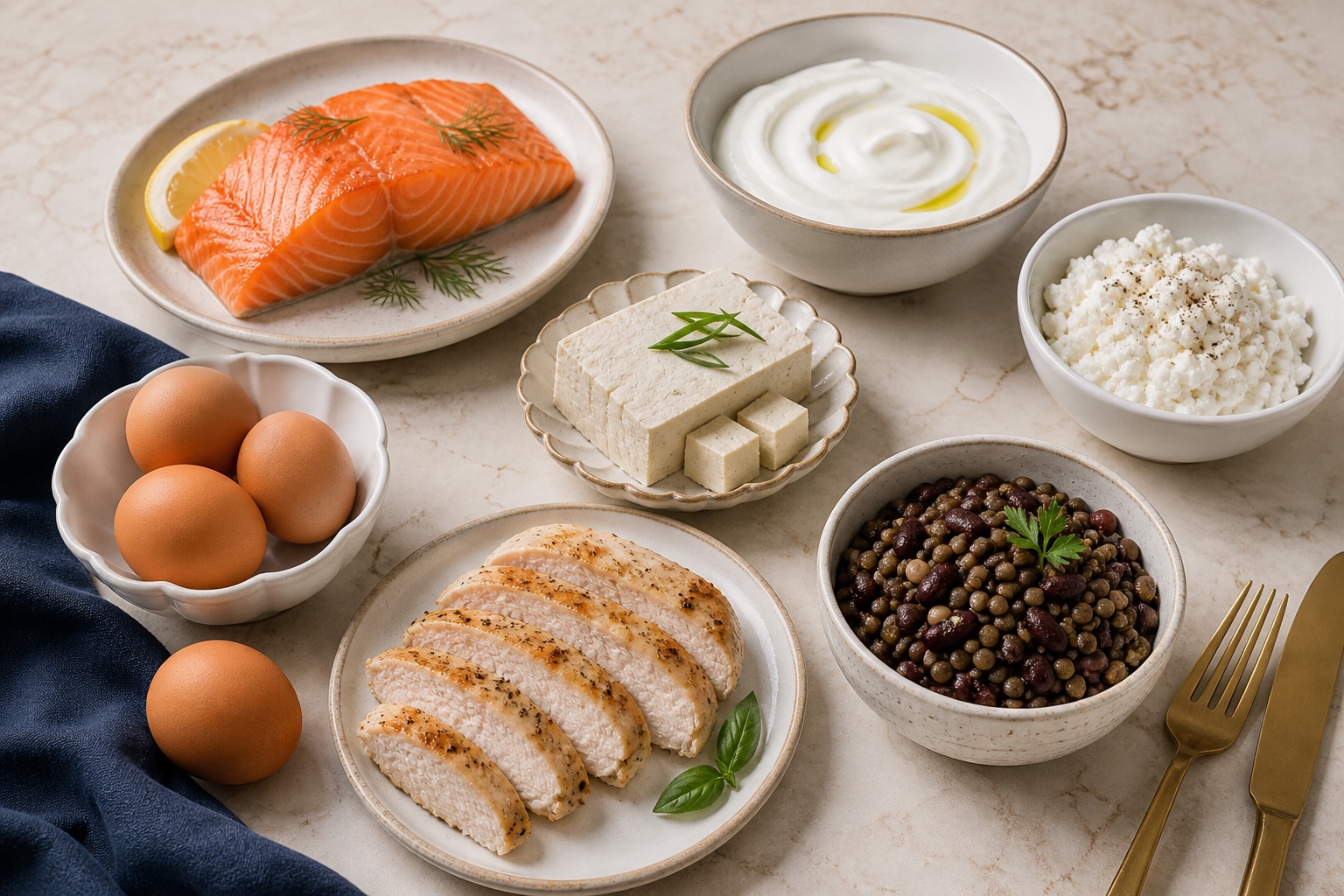
Best Protein Sources
Animal-Based Sources
Examples include:
- Chicken breast
- Turkey
- Fish
- Shrimp
- Lean beef
- Eggs
- Egg whites
Dairy Sources
Examples include:
- Greek yogurt
- Cottage cheese
- String cheese
- High-protein dairy products
Convenient Protein Options
Examples include:
- Protein shakes
- Ready-to-drink protein beverages
- Protein powders
These can be especially helpful when appetite is limited.
Plant-Based Sources
Examples include:
- Tofu
- Tempeh
- Edamame
- Lentils
- Beans
Many individuals use a combination of plant and animal protein sources.
Building A Protein-First Plate
A simple strategy is:
Step 1: Eat your protein first.
Step 2: Add vegetables and fiber-rich foods.
Step 3: Include additional foods as desired.
This approach helps ensure important nutritional needs are met even when appetite is reduced.
Common Protein Mistakes
Examples include:
- Waiting until the end of the meal to eat protein
- Relying primarily on snack foods
- Skipping meals entirely
- Assuming all protein sources are equal
- Not planning ahead
Many patients discover that convenience strongly influences success.

When Protein Shakes Make Sense
Protein shakes can be useful when:
- Appetite is low
- Travel makes meal preparation difficult
- Recovery needs increase
- Protein intake consistently falls short
A protein shake should generally be viewed as a tool rather than a requirement.
Green Zone (Consistent Intake)
Focus on:
- Protein at every meal
- Balanced nutrition
- Strength training
- Consistent habits
Yellow Zone (Inconsistent Protein)
Consider:
- Adding protein-rich snacks
- Using protein shakes strategically
- Planning meals ahead of time
Orange Zone (Low Appetite)
Consider:
- Prioritizing protein first
- Choosing high-quality protein sources
- Reviewing intake patterns
Red Zone
Discuss your nutrition plan with your healthcare professional if:
- Weight loss becomes excessive
- Energy levels decline significantly
- Muscle loss becomes a concern
- Nutritional intake becomes difficult to maintain
Protein And Long-Term Success
Many patients focus heavily on what foods they should avoid.
A more productive question is often:
"What foods should I prioritize?"
For most people using GLP-1 therapy, protein belongs at the top of that list.
When combined with hydration, movement, sleep, and consistency, a protein-first approach can become one of the most valuable habits for supporting long-term success.
Key Takeaways
- Protein is one of the most important nutrients during GLP-1 therapy.
- Appetite reduction makes intentional protein intake more important.
- Protein supports muscle preservation, fullness, and recovery.
- A protein-first approach can improve long-term results.
- Protein shakes can be useful tools when appetite is limited.
- Prioritize protein before other foods whenever possible.
Educational Disclaimer
This article is intended for educational and wellness purposes only. Individual experiences vary. The information provided is not intended to diagnose, treat, cure, or prevent any disease. Always consult your healthcare professional regarding questions about your medications, symptoms, nutrition plan, or health concerns.
Related Articles
Educational only — always discuss medication choices with your care team.